
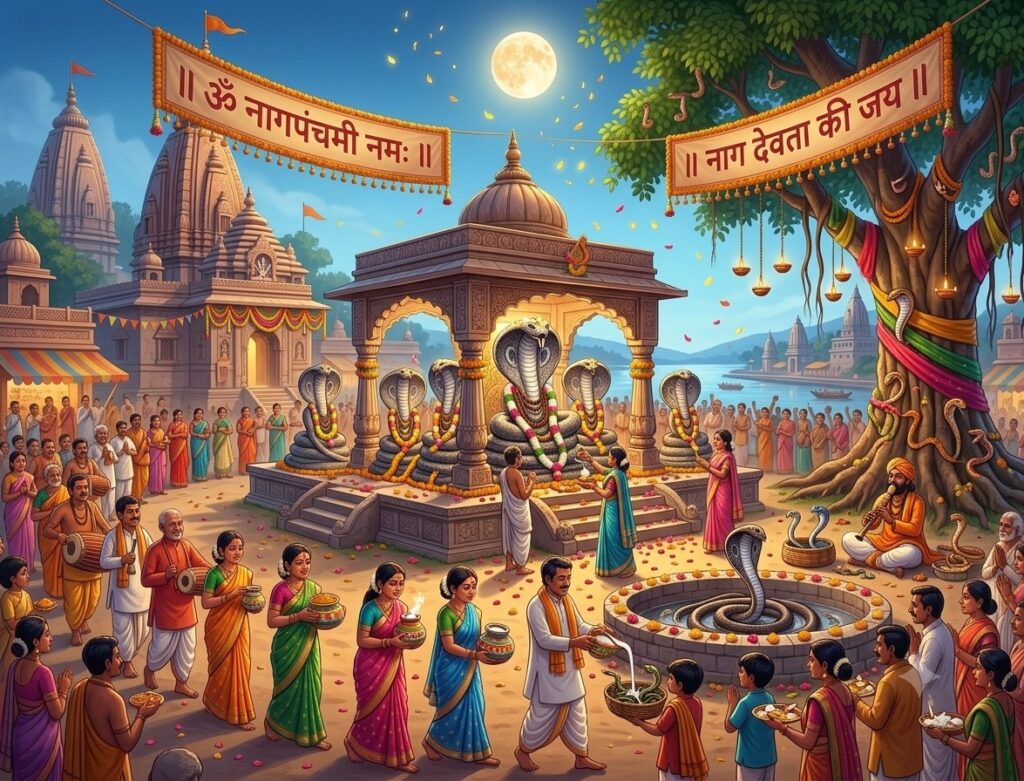
Nag Panchami is dedicated to the worship of Nagas, serpent deities regarded in Hindu tradition as powerful, sacred beings deserving of reverence and protection rather than fear.
When is Nag Panchami celebrated?
Nag Panchami falls on Panchami (the fifth Tithi) of Shukla Paksha in the Hindu lunar month of Shravan, typically in July or August on the Gregorian calendar.
This Year's Panchang Details
Monday, August 17, 2026
- Tithi
- Panchmi
- Paksha
- Shukla Paksh
- Nakshatra
- Chitra
- Yoga
- Subha
- Karana
- Baalav
- Hindu Month (Amavasyant)
- Shravana
- Hindu Month (Poornimant)
- Shravana
- Moon Rashi
- Virgo(Kanya)
- Sun Rashi
- Cancer(Kark)
Why is Nag Panchami celebrated?
The day honors serpents as sacred beings associated with fertility, protection, and cosmic balance, and is observed to seek their blessing while also asking forgiveness for any harm done to snakes, deliberately or not, especially relevant since Shravan’s monsoon rains often bring snakes into closer contact with human settlements.
Religious and spiritual significance
Nagas hold a significant place across Hindu iconography and mythology — Shiva is depicted wearing a serpent around his neck, Vishnu reclines on the great serpent Shesha, and Krishna is associated with subduing the serpent Kaliya. Nag Panchami reflects this broader reverence for serpents as powerful, spiritually significant beings rather than purely as creatures to be feared.
History and background
Serpent worship in India is documented as far back as the Indus Valley Civilization and continues through Vedic and later Puranic literature, making Nag Panchami one of the older continuously observed threads of Hindu devotional practice, closely tied to agrarian life and the monsoon season.
Mythological story
The following reflects traditional belief and scripture, not verified historical fact.
Among several stories associated with the day, one widely told account from the Bhagavata Purana describes young Krishna subduing the venomous serpent Kaliya, who had been poisoning the waters of the Yamuna river near Vrindavan. Rather than killing Kaliya, Krishna danced upon his hoods until he submitted, then banished him from the river rather than causing his death — a story often cited as reflecting the broader theme of respecting rather than destroying serpents.
How Nag Panchami is traditionally celebrated
- Offering milk, flowers, and prayers to snake idols, images, or, in some rural areas, to live snakes brought by snake charmers.
- Visiting temples with Naga deities or Shiva temples, given the serpent’s association with Shiva’s iconography.
- Drawing images of snakes on the walls or entrance of the home in some regional traditions.
- Avoiding digging or plowing the earth on this day in some farming communities, out of concern for disturbing snake burrows.
Important rituals and customs
- Fasting through the day in many households, eating only after the puja is complete.
- Offering milk directly at snake burrows or anthills in some rural traditions, though wildlife experts note snakes don’t actually drink milk, and this practice has drawn increasing scrutiny for its effect on captured snakes.
- Reciting stories and legends associated with serpents in Hindu mythology.
Regional variations
Nag Panchami is widely observed across India, with particularly strong traditions in Maharashtra, especially in Battis Shirala, historically known for live-snake-handling customs now facing legal and conservation scrutiny, and in parts of Karnataka and Rajasthan with their own local Naga-worship traditions.
Related Panchang concepts
- Tithi & Paksha — understand the lunar day Nag Panchami is calculated from (Panchami, Shukla Paksha).
- Hindu Calendar Months — learn about Shravan and the rest of the Hindu lunisolar month cycle.
- Full Year Panchang — look up this year’s date for Nag Panchami and every other festival at a glance.
Frequently Asked Questions
Why are snakes worshipped rather than feared on Nag Panchami?
Serpents hold a significant, sacred place in Hindu iconography and mythology, and the day reflects a tradition of reverence and coexistence with them rather than viewing them purely as a danger.
Is offering milk to snakes still practiced today?
It remains part of some traditions, though wildlife experts note that snakes don’t naturally drink milk, and the practice of handling captured snakes for this purpose has drawn increasing legal and conservation concern in recent years.
Dates by year: 2025 · 2026 · 2027 · 2028 · 2029 · 2030 · 2031 — all Hindu festival dates