
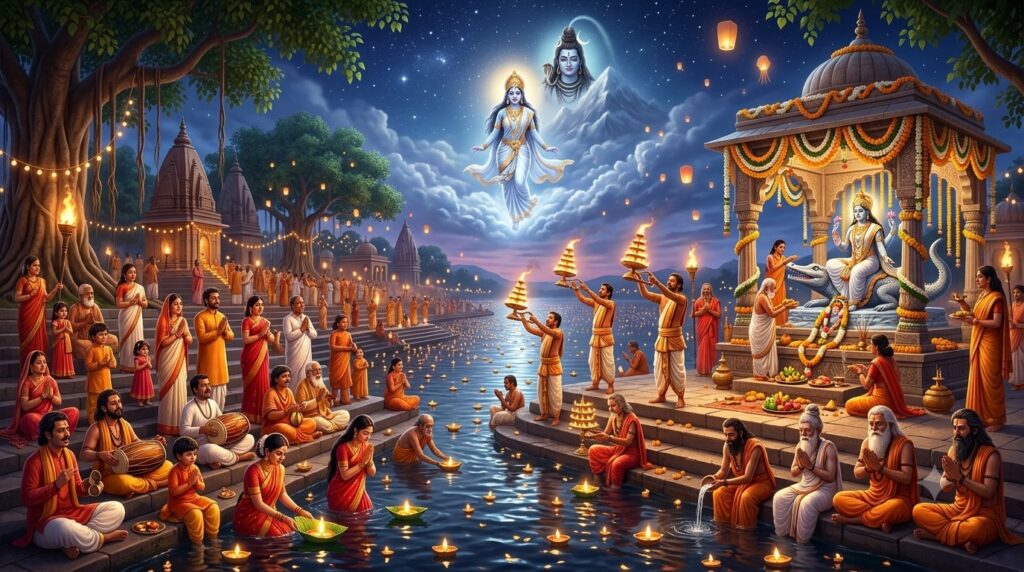
Ganga Dussehra celebrates the descent of the river Ganga from the heavens to earth, and is marked with ritual bathing and worship along the river’s banks, especially in the cities most closely associated with her.
When is Ganga Dussehra celebrated?
Ganga Dussehra falls on Dashami (the tenth Tithi) of Shukla Paksha in the Hindu lunar month of Jyeshtha, typically in May or June on the Gregorian calendar.
This Year's Panchang Details
Monday, May 25, 2026
- Tithi
- Dashmi
- Paksha
- Shukla Paksh
- Nakshatra
- UttaraPhalguni
- Yoga
- Vajra
- Karana
- Taitil
- Hindu Month (Amavasyant)
- Adhik Jyeshtha
- Hindu Month (Poornimant)
- Adhik Jyeshtha
- Moon Rashi
- Leo(Simha)
- Sun Rashi
- Taurus(Vrish)
Why is Ganga Dussehra celebrated?
The day commemorates Ganga’s descent to earth, an event traditionally understood as a gift of purification and life-sustaining water to humanity, made possible through the penance of King Bhagiratha.
Religious and spiritual significance
Ganga is regarded as one of the most sacred rivers in Hindu tradition, and bathing in her waters on this day is considered especially purifying, believed to wash away ten kinds of sins (reflected in the name “Dus-hara,” roughly “remover of ten”). The day is closely tied to gratitude for water as a source of life.
History and background
The story of Ganga’s descent is told across the Ramayana, the Mahabharata, and several Puranas, and Ganga Dussehra’s observance along the river’s banks, particularly at Haridwar, is documented as a long-continuous pilgrimage tradition.
Mythological story
The following reflects traditional belief and scripture, not verified historical fact.
According to the Ramayana, King Bhagiratha’s ancestors had been reduced to ashes by the sage Kapila’s curse, and only the waters of the heavenly Ganga could grant them liberation. Bhagiratha performed severe penance to bring Ganga down to earth. Because her force would have been too great for the earth to bear directly, Lord Shiva agreed to receive her descent in his matted hair, releasing her gently onto the earth as the river Ganga — the origin, in this telling, of Shiva’s iconography with the river flowing from his hair.
How Ganga Dussehra is traditionally celebrated
- Ritual bathing in the Ganga or another sacred river, especially at Haridwar, Varanasi, and other riverside pilgrimage cities.
- Offering flowers, lamps, and prayers to the river.
- Donating food, water vessels, and charitable items, considered especially meritorious on this day.
- Reciting the Ganga Stotram or other river-devotional hymns.
Important rituals and customs
- Performing a symbolic count of ten dips or offerings, reflecting the “ten sins” theme associated with the day’s name.
- Evening Ganga Aarti ceremonies at major ghats, particularly elaborate at Haridwar and Varanasi.
- Fasting or eating a simple vegetarian meal through the day.
Regional variations
Ganga Dussehra is observed with particular scale in Haridwar, where the river is believed to have first touched the earth, and in Varanasi, both major pilgrimage destinations for the occasion. Observance elsewhere in India often centers on whichever local river or water body is available, rather than the Ganga specifically.
Related Panchang concepts
- Tithi & Paksha — understand the lunar day Ganga Dussehra is calculated from (Dashami, Shukla Paksha).
- Hindu Calendar Months — learn about Jyeshtha and the rest of the Hindu lunisolar month cycle.
- Full Year Panchang — look up this year’s date for Ganga Dussehra and every other festival at a glance.
Frequently Asked Questions
Why does Ganga Dussehra share part of its name with the autumn festival Dussehra?
Both share the Sanskrit root referring to the removal of sin or negativity, but they’re unrelated festivals on different dates — Ganga Dussehra centers on the river Ganga’s descent, while the autumn Dussehra marks Rama’s and Durga’s separate victories.
Is Ganga Dussehra only observed near the Ganga river itself?
Its core tradition is tied to the Ganga, especially at Haridwar and Varanasi, but many devotees elsewhere mark the day with ritual bathing in whatever local river or water body is available to them.
Dates by year: 2025 · 2026 · 2027 · 2028 · 2029 · 2030 · 2031 — all Hindu festival dates