
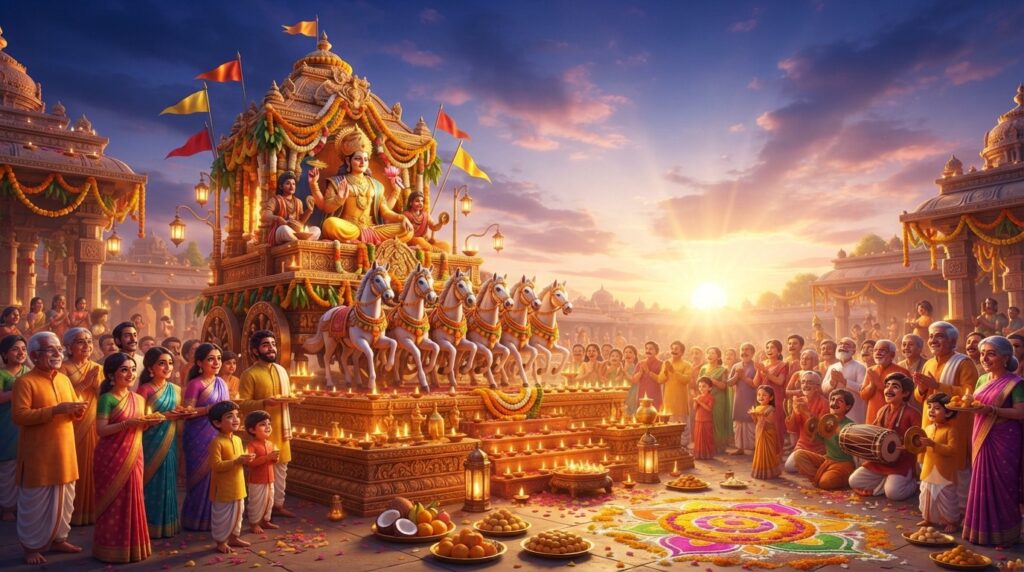
Ratha Saptami honors Surya, the Sun God, celebrated as his symbolic birthday and marking the sun’s chariot beginning its journey with renewed strength as winter gives way to longer days.
When is Ratha Saptami celebrated?
Ratha Saptami falls on Saptami (the seventh Tithi) of Shukla Paksha in the Hindu lunar month of Magh, typically in January or February on the Gregorian calendar.
This Year's Panchang Details
Sunday, January 25, 2026
- Tithi
- Saptami
- Paksha
- Shukla Paksh
- Nakshatra
- Revati
- Yoga
- Siddha
- Karana
- Gar
- Hindu Month (Amavasyant)
- Magha
- Hindu Month (Poornimant)
- Magha
- Moon Rashi
- Pisces(Meen)
- Sun Rashi
- Capricon(Makar)
Why is Ratha Saptami celebrated?
The day celebrates Surya as the source of life-sustaining light and energy, and is treated as his symbolic birthday, marking the sun’s increasing strength as the days grow longer following the winter solstice period.
Religious and spiritual significance
Surya worship is one of the oldest continuous devotional traditions in India, and Ratha Saptami is considered particularly auspicious for health, vitality, and the removal of ailments and negativity, since sunlight itself is closely tied to physical well-being in traditional practice.
History and background
References to Surya worship and his seven-horse chariot — representing the seven colors of light — appear across the Vedas and later Puranic literature. Ratha Saptami’s continued observance at major Surya temples reflects one of Hinduism’s older, more continuous devotional threads.
Mythological story
The following reflects traditional belief and scripture, not verified historical fact.
Surya is traditionally depicted riding a chariot drawn by seven horses, driven by Aruna, across the sky each day. The seven horses are commonly interpreted as representing the seven colors of visible light, and Ratha Saptami (“chariot seventh”) takes its name directly from this imagery, marking the day his chariot’s journey is said to have begun.
How Ratha Saptami is traditionally celebrated
- A ritual bath before sunrise, often with leaves of the arka (calotropis) plant placed on the head and shoulders, considered purifying.
- Drawing a chariot with seven horses in rangoli form at the entrance of the home.
- Offering prayers to Surya at sunrise, especially at dedicated Sun temples.
- Preparing and offering a special sweet rice dish (Chakkara Pongal or similar, by regional name) as prasad.
Important rituals and customs
- Reciting the Aditya Hridayam or other Surya-devotional hymns at sunrise.
- Visiting major Surya temples, such as the Konark Sun Temple in Odisha or the Arasavalli Surya temple in Andhra Pradesh, both especially significant on this day.
- Fasting or eating a simple, light meal through the day in many households.
Regional variations
Ratha Saptami is observed with particular significance in Odisha, at the Konark Sun Temple, and in Andhra Pradesh and Telangana, at the Arasavalli Surya temple, both major pilgrimage sites for the occasion. Household observance of the ritual bath and rangoli tradition is widespread across South India in particular.
Related Panchang concepts
- Tithi & Paksha — understand the lunar day Ratha Saptami is calculated from (Saptami, Shukla Paksha).
- Hindu Calendar Months — learn about Magh and the rest of the Hindu lunisolar month cycle.
- Full Year Panchang — look up this year’s date for Ratha Saptami and every other festival at a glance.
Frequently Asked Questions
Why are arka leaves placed on the head during the Ratha Saptami bath?
The arka (calotropis) plant is closely associated with Surya in tradition, and placing its leaves on the head and shoulders during the ritual bath is believed to be purifying and to invoke his blessing.
Is Ratha Saptami considered the Sun God’s birthday?
It’s popularly treated that way in many traditions, though its core significance is more broadly about honoring Surya and marking the sun’s renewed strength as the season turns.
Dates by year: 2025 · 2026 · 2027 · 2028 · 2029 · 2030 · 2031 — all Hindu festival dates