
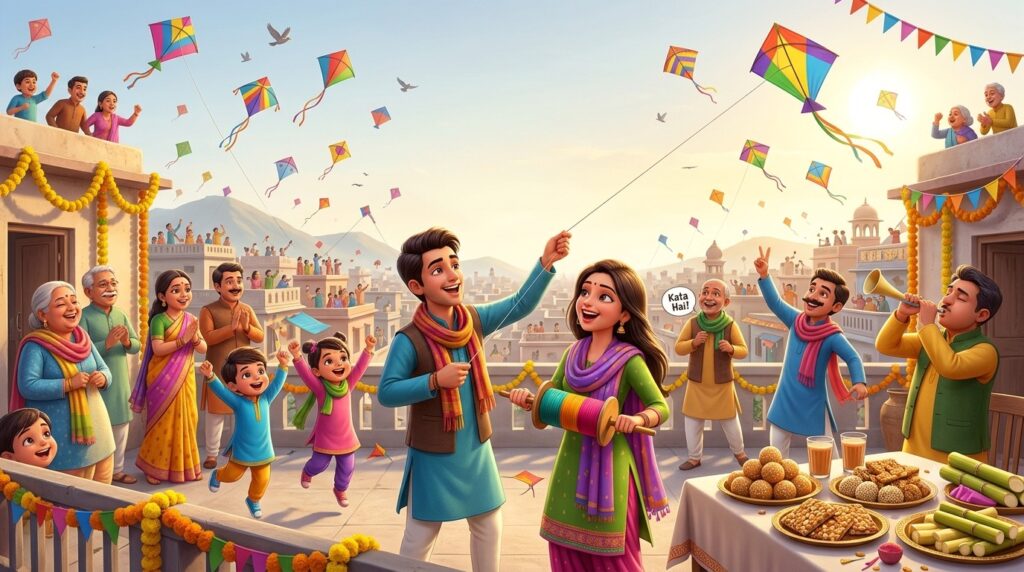
Makar Sankranti marks the sun’s transition into the zodiac sign of Capricorn (Makar) and the start of its northward journey (Uttarayan). Unlike most Hindu festivals, it’s tied to the solar calendar rather than the lunar Tithi cycle, which is why it falls on a nearly fixed Gregorian date each year.
When is Makar Sankranti celebrated?
Makar Sankranti is a solar festival, not governed by a Tithi the way most festivals on this site are — it marks the sun’s astronomical entry into Capricorn, which places it around January 14th most years, occasionally January 15th.
This Year's Panchang Details
Wednesday, January 14, 2026
- Tithi
- Ekadasi
- Paksha
- Krishna Paksh
- Nakshatra
- Anuradha
- Yoga
- Ganda
- Karana
- Baalav
- Hindu Month (Amavasyant)
- Pausha
- Hindu Month (Poornimant)
- Magha
- Moon Rashi
- Scorpio(Vrischik)
- Sun Rashi
- Sagittarius(Dhanu)
Why is Makar Sankranti celebrated?
The festival celebrates the sun’s shift toward the Northern Hemisphere, traditionally regarded as the start of a more auspicious half of the year, and coincides with the winter harvest across much of India, making it as much an agricultural thanksgiving as a solar observance.
Religious and spiritual significance
Sankranti days occur every month as the sun moves between zodiac signs, but Makar Sankranti, marking the start of Uttarayan, is considered the most spiritually significant of them. Uttarayan is traditionally regarded as an auspicious period for new beginnings, and bathing in a sacred river on this day is widely believed to be especially purifying.
History and background
References to Makar Sankranti and Uttarayan’s significance appear across Hindu astronomical and ritual texts going back many centuries. Because it follows the solar calendar, its Gregorian date has stayed relatively stable over long periods compared to lunar festivals, whose dates shift from year to year.
How Makar Sankranti is traditionally celebrated
- Sharing til-gud (sesame and jaggery sweets) with the phrase “til-gud ghya, god god bola” (“accept this sweet, speak sweetly”) in Maharashtra, symbolizing warmth and goodwill despite the winter cold.
- Flying kites, especially large-scale in Gujarat’s Uttarayan celebrations and Rajasthan.
- Taking a holy dip in a sacred river, with the Ganga Sagar Mela in West Bengal among the largest such gatherings.
- Preparing and eating khichdi in North India, where the day is sometimes simply called Khichdi.
Important rituals and customs
- Charitable giving (daan), especially of sesame, jaggery, and warm clothing, considered particularly meritorious on this day.
- Cattle worship and decoration in some farming communities, honoring their role in the harvest.
- Community kite-flying gatherings on rooftops and open grounds through the day.
Regional variations
Makar Sankranti goes by many regional names and forms: Uttarayan in Gujarat, with its famous kite festival; Lohri, a related bonfire festival observed the evening before in Punjab; Magh Bihu in Assam, marking the end of the harvest season with community feasts; Pongal in Tamil Nadu, a distinct multi-day harvest festival on the same astronomical date; and simply Khichdi in much of North India. This list reflects commonly cited regional patterns rather than an exhaustive account.
Related festivals
Makar Sankranti shares its astronomical date with Pongal, Tamil Nadu’s own multi-day harvest festival, and is preceded by Lohri in Punjab.
Related Panchang concepts
- Full Year Panchang — look up this year’s date for Makar Sankranti and every other festival at a glance.
Frequently Asked Questions
Why does Makar Sankranti fall on almost the same date every year, unlike most Hindu festivals?
It’s a solar festival tied to the sun’s movement into Capricorn, rather than a lunar Tithi like most festivals on this site — solar dates stay far more stable year to year than lunar ones.
Is Makar Sankranti the same festival as Pongal?
No, though they share the same astronomical basis and generally the same date. Pongal is Tamil Nadu’s own distinct multi-day harvest festival with its own name, rituals, and mythology.
Dates by year: 2025 · 2026 · 2027 · 2028 · 2029 · 2030 · 2031 — all Hindu festival dates