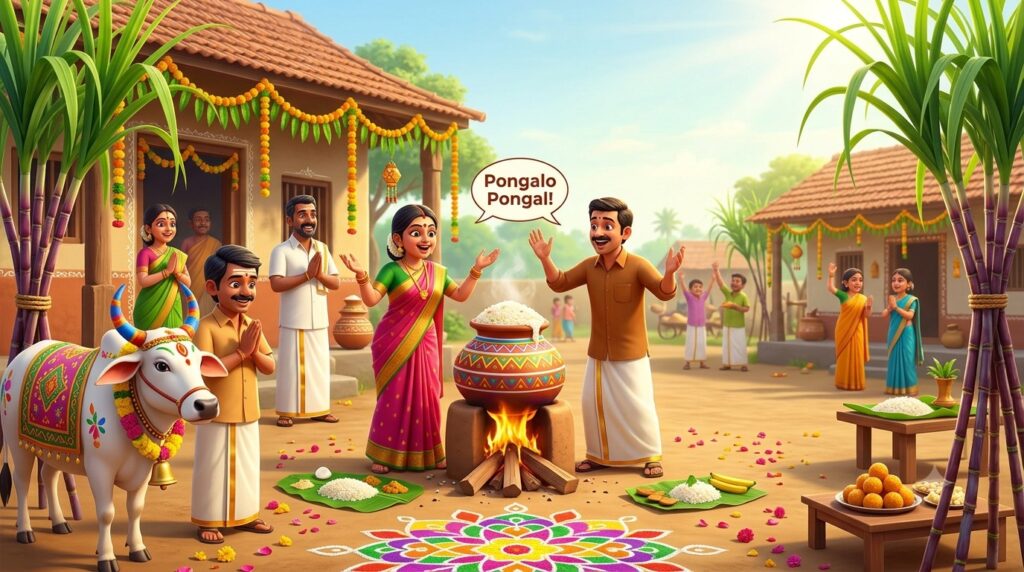
Pongal is Tamil Nadu’s major harvest festival, a four-day celebration of thanksgiving to the Sun god, the land, and the cattle that sustain agricultural life. Its name comes from the ritual of boiling rice until it overflows the pot — a deliberate symbol of abundance.
When is Pongal celebrated?
Pongal is a solar festival, not governed by a Tithi the way most festivals on this site are — like Makar Sankranti, it marks the sun’s transition into Capricorn, placing its main day around January 14th or 15th each year, with the full observance spanning four days.
This Year's Panchang Details
Wednesday, January 14, 2026
- Tithi
- Ekadasi
- Paksha
- Krishna Paksh
- Nakshatra
- Anuradha
- Yoga
- Ganda
- Karana
- Baalav
- Hindu Month (Amavasyant)
- Pausha
- Hindu Month (Poornimant)
- Magha
- Moon Rashi
- Scorpio(Vrischik)
- Sun Rashi
- Sagittarius(Dhanu)
Why is Pongal celebrated?
Pongal is a harvest thanksgiving, expressing gratitude to the Sun, the earth, and farm animals for a successful growing season, timed to the reaping of the winter harvest across Tamil Nadu.
Religious and spiritual significance
The festival’s central ritual — boiling fresh rice with milk and jaggery until it overflows — is a deliberate act of symbolism: the overflow represents abundance and prosperity for the year ahead, and the moment is often marked with the shout “Pongalo Pongal!” as families watch it happen.
History and background
Pongal’s harvest-thanksgiving traditions are documented in Tamil literature going back many centuries, making it one of the older continuously observed harvest festivals in India, closely tied to Tamil agrarian and cultural identity specifically, distinct from Sankranti traditions elsewhere in India even though they share an astronomical basis.
How Pongal is traditionally celebrated
Pongal unfolds over four distinct days:
- Bhogi Pongal — the first day, devoted to discarding old belongings and lighting bonfires, symbolizing a fresh start.
- Surya Pongal — the main day, when the ceremonial rice dish is boiled outdoors in a decorated clay pot as an offering to the Sun god.
- Mattu Pongal — the third day, honoring cattle, who are bathed, decorated with paint and bells, and fed specially prepared food in gratitude for their role in farming.
- Kaanum Pongal — the closing day, for visiting family and friends and strengthening community bonds.
Important rituals and customs
- Drawing elaborate kolam (rice-flour rangoli patterns) at the entrance of homes throughout the festival.
- Cooking the Pongal dish in a new clay pot, often decorated with turmeric and sugarcane tied around it.
- Decorating cattle with garlands, bells, and colored horns on Mattu Pongal.
- Jallikattu — a traditional bull-taming sport held in some parts of Tamil Nadu during the Pongal period, historically tied to Mattu Pongal’s cattle themes.
Regional variations
Pongal is celebrated across Tamil Nadu and by Tamil communities worldwide, with rural areas typically observing the full four-day sequence more elaborately than urban ones. It shares its astronomical date with Makar Sankranti observances elsewhere in India, though its name, mythology, and specific rituals are distinctly Tamil.
Related festivals
Pongal shares its astronomical basis with Makar Sankranti, observed under different names and customs across the rest of India on the same date.
Related Panchang concepts
- Full Year Panchang — look up this year’s date for Pongal and every other festival at a glance.
Frequently Asked Questions
Why does the rice overflow the pot during Pongal?
It’s a deliberate ritual, not an accident — letting the boiling rice and milk overflow the pot symbolizes abundance and prosperity for the year ahead.
Is Pongal the same as Makar Sankranti?
They share the same astronomical date, but Pongal is Tamil Nadu’s own distinct four-day festival with its own name, rituals, and cultural identity, separate from Makar Sankranti traditions elsewhere in India.
What is Jallikattu?
A traditional bull-taming sport held in parts of Tamil Nadu during the Pongal period, historically connected to the festival’s Mattu Pongal cattle-honoring day.
Dates by year: 2025 · 2026 · 2027 · 2028 · 2029 · 2030 · 2031 — all Hindu festival dates